
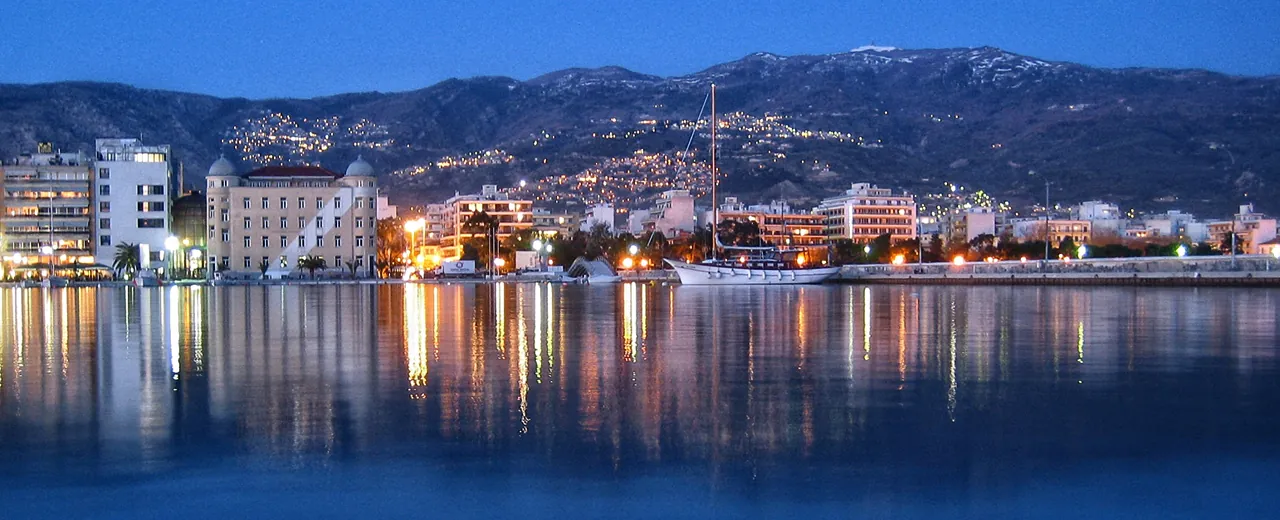
Volos is the capital of Magnesia, in the region of Thessaly, and lies in the middle of mainland Greece, between Athens and Thessaloniki. Built between the Pagasetic Gulf and the foothills of Pelion, close to ancient Iolkos, it is seen as one of the most beautiful and important cities in Greece, with about 140,000 people (2021 census).
Every year it welcomes thousands of visitors from Greece and abroad: its natural beauty, its sights and the mix of mountain and sea make it a first choice for many travellers. It is no coincidence that the writer Menelaos Loudemis called Volos "one of the great generosities of life".
Where the name comes from
There are several stories about how Volos got its name. The first says the name comes from the gradual changes of ancient Iolkos: Iolkos – Giolkos – Giolos – Volos. The second says the city was named after a rich landowner, Folos. The third links the name to the Slavic deity Volos or Veles, while the fourth claims it is a corruption of the Italian word golfo, meaning gulf. The name first appears in the 14th century, and at first it described today's village of Ano Volos (Upper Volos).
The history of Volos
The city has a long and rich history: it starts in mythology and continues through ancient times, the Byzantine period and the modern age.
Mythology
It is said that the founder of the area was Magnes, son of Argos or, according to others, of Zeus or Aeolus. The area is closely tied to the myth of the Argonauts, who set off from here. Jason's aim was to bring the Golden Fleece back to Iolkos from Colchis. For this, the skilled Argos built the ship Argo, guided by the goddess Athena. The expedition started from Pagasae, the port of ancient Iolkos, and the greatest heroes of the time took part, such as Heracles and Orpheus. Since then the Argo has been the symbol of Volos.
Ancient times
The area was one of the first in Greece to be inhabited. Excavations have found nearly forty Neolithic settlements in the wider area, the most important being Sesklo and Dimini, excavated by Christos Tsountas in the early 20th century. Both sites gave, among other things, pottery and tools of bone and stone.
Iolkos, a name closely tied to the Argonauts, dates back to the Mycenaean period. The kings of Iolkos had their seat at Dimini, while trade went through the port at Pefkakia. In the Classical period Pagasae also thrived as the port of Pherae.
Around 294/293 BC Demetrius Poliorcetes ("the Besieger"), king of Macedon, founded Demetrias in the area known today as Pefkakia. The city went through long periods of prosperity until it fell to the Romans in 197 BC.
Dimini
At Dimini a Neolithic settlement was uncovered that was lived in until the Bronze Age, and archaeologists found jewellery, tools and pottery there. Southeast of the settlement's hill lies another, Mycenaean settlement linked to Iolkos, where a large palace complex with workshops, storerooms and places of worship has been uncovered so far.
Sesklo
At Sesklo a prehistoric settlement was found, which grew around the hill of Kastraki and the area of today's village of Sesklo. It was first inhabited in the middle of the 7th millennium BC and in the Middle Neolithic it covered a large area. It is considered one of the most important prehistoric settlements in Greece and in Europe.
Byzantine times
Demetrias, together with Phthiotic Thebes, in the area of today's Nea Anchialos, was among the most important places in Thessaly from pre-Christian to post-Byzantine times.
At the end of the 6th century people left the city because of Slavic raids, and in the following centuries the area lost its importance, as it was exposed to attacks by Saracen pirates.
In 1204 Volos was ruled by the great Byzantine family of the Melissenoi, and in 1423 the Ottomans took the old castle. At that time the Christian population began to leave the coastal settlements and move up to Pelion.
Ottoman period
In this period Pelion saw a great intellectual and economic flowering, thanks to privileges granted by the Ottomans. Zagora and Makrinitsa were the main centres of the area. Christians were not allowed to live in the castle of Volos, which was held by the Ottomans. In the Revolution of 1821 the Pelion villages rose up, but the Ottomans put down the revolt.
Today's Volos started to be built soon after 1830 and quickly grew rich. When Thessaly joined the Greek state, the Greek army entered the city on 2 November 1881. At the time Volos had about 5,000 inhabitants.
Modern times
The Municipality of Pagasae, forerunner of today's Municipality of Volos, was founded on 31 March 1883 and grew fast thanks to its prime location and its port. From then on the city saw strong economic growth, mainly from trade, which is why many people began to come down from the mountain and settle on the shores of the Pagasetic Gulf. Industry grew strongly too: from 1883 factories were built that turned Volos into a major industrial centre, and the city grew with them. In 1884 the railway from Volos to Larissa was completed, and it was soon extended to Kalambaka, while in 1895 work began on the Volos–Lechonia line.
In the same period the city also saw a great cultural and social flowering. 1908 was an important year: the Higher Municipal Girls' School (Anotero Dimotiko Parthenagogeio) opened, led by Alexandros Delmouzos, but it closed three years later. In the same year the Labour Centre of Volos was founded, the first in Greece.
After the Asia Minor Catastrophe many refugees came and settled in the city, bringing much-needed labour. Most of them settled in the area of Xirokampos, bringing with them the customs, culture and traditions of Asia Minor. Over the years the settlement grew into Nea Ionia, which today belongs to the Municipality of Volos and is separated from the city centre by the Krafsidonas stream.
During the Second World War the city suffered under the harsh Italian and German occupation, with heavy loss of life, and its growth came to a halt.
Volos today
Volos is, without exaggeration, one of the most beautiful cities in Greece. It has modern tourist facilities for a comfortable stay, many sights and religious monuments, and easy access from every part of the country. Very close by is Nea Anchialos airport, with seasonal flights, mostly in summer, from a few European cities; routes change every year.
The port of Volos is one of the largest in Greece: freight moves through it, and ferries and fast boats leave from here for the Sporades (Skiathos, Skopelos, Alonissos). Many fishing boats work the Pagasetic Gulf and supply the tsipouradika, small places that serve tsipouro with seafood meze.
If you are in Volos, take a walk along the lovely seafront, lined with cafés and restaurants. The stroll towards the church of Agios Konstantinos and Anavros, with a coffee and a view of the Pagasetic Gulf, is one of the nicest things to do in town. Close to Volos are the fine beaches of Anavros and Alykes, as well as the many beaches of Pelion.
The city's churches are of special interest for their architecture. The church of Agios Nikolaos in the centre is outstanding, and various events are held in its large courtyard. The city also has many museums, listed below.
Volos is home to the University of Thessaly, founded in 1984. The many students give the city a special energy. Cultural events take place often, such as the 2012 syrtaki dance that set a Guinness World Record. The nightlife is lively too, with many bars and clubs.
But what Volos is most famous for is its tsipouradika, which number in the hundreds across the city. According to tradition, it was the refugees from Asia Minor who started serving tsipouro with seafood meze. Whichever tsipouradiko you choose, order a "25ari": that is what people in Volos call the small bottle of tsipouro, about the size of a small glass, and each 25ari comes with a different meze.
Museums
The main museums of the city:
- Archaeological Museum of Volos (Athanasakeio) — in a neoclassical building from 1909, with finds from prehistoric to Early Christian times: objects from Sesklo and Dimini, Palaeolithic tools, a separate room for the Neolithic, gold coins, grave stelae from Demetrias and replicas of tombs. Address: Athanasaki 1.
- Giorgio de Chirico Art Centre — named after the great painter, who was born in Volos in 1888. Its permanent exhibition is the Alexandros Damtsas collection, with about 500 works from all the major art movements of the 20th century, with a prominent place for 19th-century Greek painters; it also hosts temporary exhibitions. Address: Metamorfoseos 3.
- N. & S. Tsalapatas Brickworks Museum — in the factory founded in 1926, a rare preserved industrial complex. It is part of the Piraeus Bank Group Cultural Foundation museum network.
- Kitsos Makris Folklore Centre — in the house of folklorist Kitsos Makris, with a rich folklore collection: works by Theophilos, murals by Pagonis, about 4,000 books and periodicals, photographs of folk tradition, mostly from Pelion, and works by the folk artist N. Christopoulos. Address: Kitsou Makri 38.
- Thessaly Railway Museum — at the Volos railway station, with a rich collection of railway objects and relics: photographs, uniforms, tools, lamps, 19th-century ticket machines and much more. Address: Papadiamanti 1.
Before you go, check each museum's current opening days and hours.
Pelion in 6 chapters
Know what you are looking at: history, nature, architecture, food, arts and customs.
 019′HistoryFrom mythology to the present day
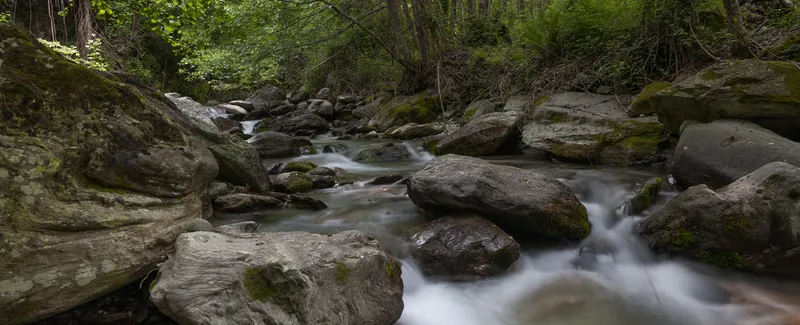 026′NatureWhere the mountain meets the sea
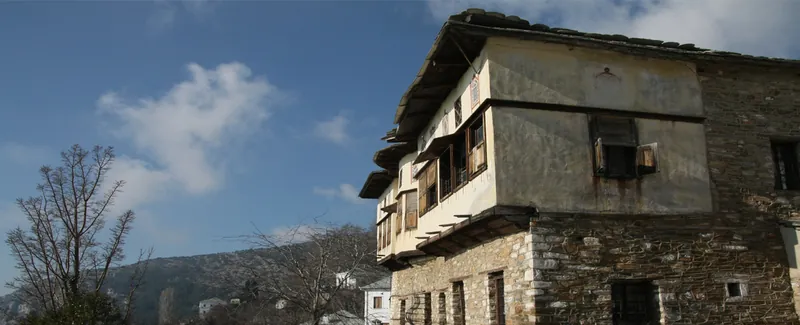 0310′ArchitectureStone, wood and slate in tune with nature
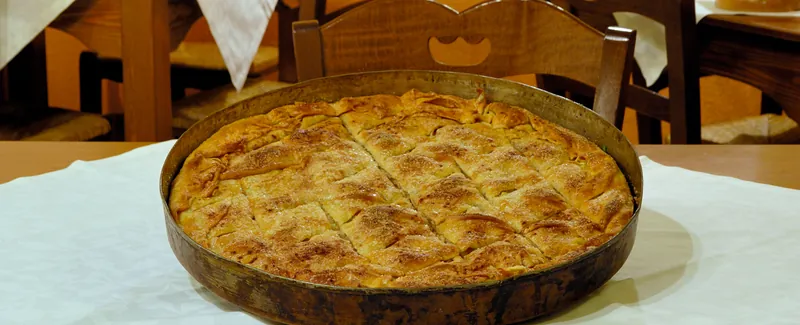 046′CuisineA journey through flavours and scents
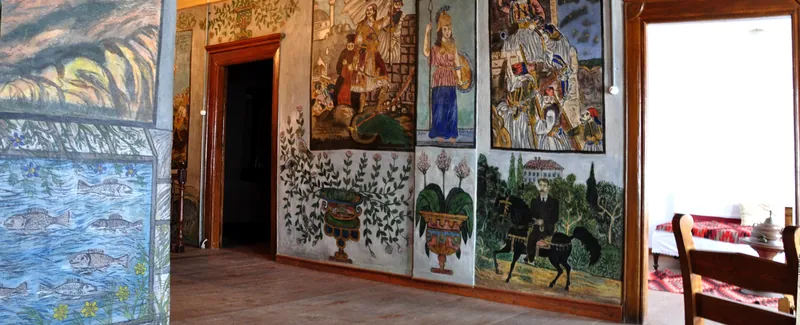 0511′Arts & LettersSchools, painters and museums of the mountain
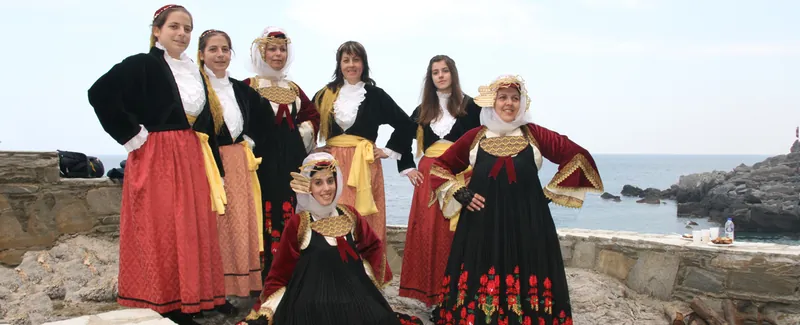 068′Customs & TraditionsWeddings, village fairs and old rituals