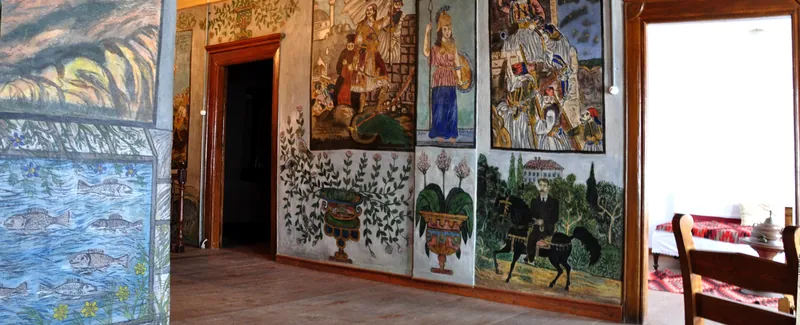
Like almost every corner of Greece, Pelion has its own cultural character, with customs and traditions that are still alive today and win over anyone who gets to know them.
Over the centuries, local people created and kept a tradition all their own: beautiful myths born of local imagination, folk tales, sayings, folk songs and customs. Below you will find some of the rituals and events you can still see in Pelion, such as the traditional Pelion wedding, customs tied to particular feast days, and cultural events that keep this tradition going, share it with visitors and pass it on to younger generations.
The Pelion wedding
Around the big moments of life (birth, christening and marriage), the people of Pelion created a whole series of ritual customs. In villages such as Portaria and Trikeri the traditional Pelion wedding is revived from time to time. It is one of the best-known local customs, full of folk moments that delight visitors and bring back memories for locals. The reenactment lasts several days. A week before the wedding, two or three young men walk the streets carrying the flambouro, the wedding banner, and announce the happy news. On Wednesday comes the “alevromata” (the flouring) of the groom and the bride, and on Thursday the wedding bread is kneaded. On Friday the bride’s dowry is put on show at her parents’ house, a party starts with music, and relatives pin money onto the dowry linens; then the dowry is carried to the couple’s new home. On the eve of the wedding come the “stavrodeipna”, when the groom and the bride each celebrate separately at their parents’ houses. The wedding itself is on Sunday, followed by a big party on the village square with traditional music.
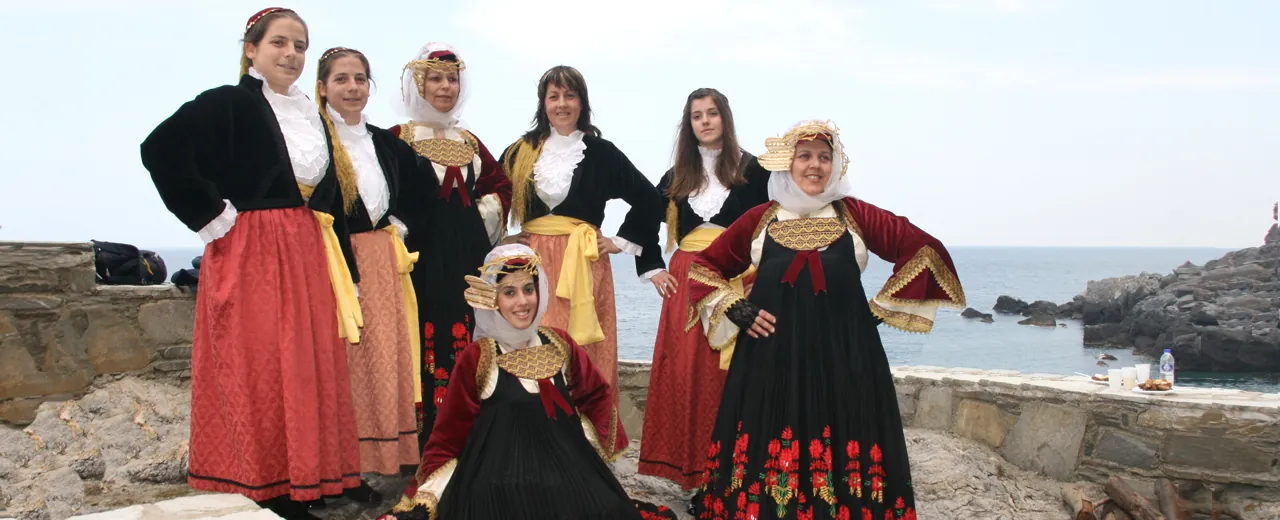
During the revival, the village women wear striking embroidered costumes and the songs are played on traditional instruments. A few more Pelion wedding customs:
Shaving the groom. In Pelion, as in many parts of Greece, the groom’s friends still shave him before the wedding. In the old days, after soaping his face, they pretended to shave him with an axe. To escape, he promised them a meal. If the offer was not good enough, the axe was swapped for a saw. The promises went on until his friends were happy, and only then did a real razor come out.
The bratimi or vlamides. The groom and the bride each choose some close friends as their bratimi and bratimisses (best men and bridesmaids). Tradition says their number must be odd (3, 5 or, more rarely, 7, separately for the bride and for the groom) for the marriage to go well. The young men wear scarves on their shoulders, the girls wear flowers, and they help with all the preparations. One rule: the vlamides must be unmarried.
The bride’s shoes. While the bride is getting ready, her unmarried friends take her right shoe and write their names on the sole. They say that whichever name rubs off first belongs to the girl who will marry first.
The wedding sugared almonds. Unmarried girls take a few blessed sugared almonds (koufeta) from the groom’s pocket and put them under their pillow that same night. Whoever they dream of will be their future husband.
The Maides of Makrinitsa
The Maides is a dance-and-theatre custom named after May, the spring month above all. It celebrates the rebirth of life and nature in spring, and its roots are traced back to the worship of Dionysus. In the past it took place on May Day; today it is performed on the square of Makrinitsa, where the young people of the village put on traditional costumes, deck themselves with flowers and welcome May with dances and songs. The Maides of Makrinitsa are listed in Greece’s National Inventory of Intangible Cultural Heritage.
One young man plays May: his body is covered in seasonal flowers, he wears a colourful flower wreath on his head and holds the maypole stick (mayoxylo). Around him are the zeibekides, masked young men in red waistcoats and breeches, tasselled fezzes and wide sashes with swords and pistols tucked in. The zeibeks were irregular fighters from western Asia Minor in Ottoman times. With folk musicians in tow, the troupe goes round the village houses, dancing and singing, and collects the customary treats. Other members of the troupe are the genitsaros (janissary), leader of the group, the “girl” (also a man in disguise, often with a thick moustache), the hodja (a Turkish cleric) in a loose robe and turban, the gypsy man and woman with blackened faces and legs, the doctor and others.
At the climax of the show, someone makes a rude pass at the “girl” and a “killing” follows. The doctor tries in vain to save the dead man, until May lays a flower on him to smell and, amid dancing and singing, he comes back to life.
The custom dates back to the Ottoman period. After breaks during the hard years of the 20th century, it was revived in 1957 and again in 1976, and since then it has been performed almost every year.
Klidonas
Klidonas has been revived in Afetes and Agios Dimitrios, around the feast of St John the Baptist on 24 June. It is a girls’ custom for finding out their fate and their luck, with roots in ancient times. On the eve, 23 June, the unmarried girls gather in a house and one of them takes a jug to fill at the village fountain. All the way there and back she must not say a word, because if she speaks, Klidonas loses its power to foretell. The “silent water” is poured into a bakiri, a copper pot, and each girl drops in something of her own, a ring or a brooch: her “sign”. They cover it with a red cloth, leave it outdoors overnight and sing around it. The next day, after church, they carry it back into the house singing: “Anoigoumi ta Klidouna stou Ai-Gianniou ti chari, ki oti ini tychiro tha vgei tou rizikari” (“We open Klidonas by the grace of St John, and whatever is lucky will come out”). Then they uncover it. Around it stand women poets who recite couplets, the rizikaria. With each couplet a girl pulls a sign out of the water and holds it up high; whoever owns the sign also owns that “prophecy”. This goes on until all the signs are out, and if the couplet that fell to a girl is not a good one, she will most likely not claim her sign.
There is also another version: as soon as the girls get back home, each one keeps a little silent water in her mouth and walks around the neighbourhood. The first man’s name she hears will be the name of the man she marries.
The Klidonas reenactment is accompanied by traditional dances, and the celebration ends with the customary burning of the May wreaths.
Carnival customs
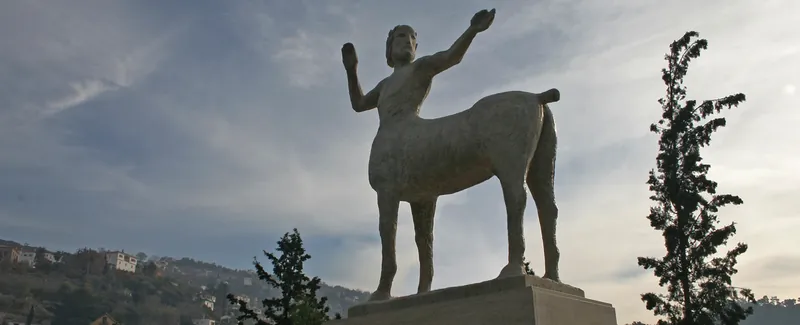
At carnival time, too, the mountain of the Centaurs fills with lovely traditional events. The Koudounades (bell-wearers) of Drakia stand out on Carnival Sunday: after going round the village houses, they meet on the square and party with visitors, with music and dancing, until morning. Also well worth seeing are the carnival events around Agria (the former municipality of Iolkos) and Mouresi, with the carnival parade, the maypole ribbon dance (gaitanaki), the burning of the carnival king and the launch of a hot-air balloon. Finally, Afetes holds a kite contest, while Makrinitsa revives the lighting of the “Afanos”.
Panigyria and festivals
Every year, most Pelion villages hold panigyria (village fairs), festivals and cultural events that put each village on the map and bring it crowds and life. At these “pangyria”, as locals call them, people honour the village’s patron saint, but they never miss the chance to taste the local “spirit”, which does wonders for the mood. Their cheerful character shows in the wild dancing to traditional music and songs, while the eating and drinking go on until late. You will find such fairs in almost every village, mainly in summer.
Besides the saints’ fairs, many villages hold festivals for other occasions or for their traditional products. One of them is the tsipouro festival in Katichori, where, with traditional music and songs, the making of tsipouro (the local grape spirit) is reenacted and visitors then get to taste it. Something similar happens in Stagiates with the sausage festival: the sausage-making is reenacted and the sausages are then served to villagers and visitors. The cherry festival in Agios Lavrentios, the pear festival in Milies, the apple festival in Zagora and the chestnut festival in Xorychti are a few more festivals that celebrate local produce with music, dancing and song.
One thing is certain: do not leave Pelion without experiencing a traditional panigyri.
Slaughtering the daouli
In the old days, as soon as a wild party was over, someone took a big knife and “slaughtered” the stretched skin of the daouli, the large double-headed drum. Why? They did not want the instrument that had given them so much fun to play at another party, for other people.
Cultural summer
Every summer the municipalities and cultural associations of Pelion, best known among them the summer events of the Municipality of Zagora-Mouresi, put on successful, much-loved events that show off Pelion’s cultural past and present. The programme includes revivals of the Pelion wedding and of old fairs, theatre performances, workshops, exhibitions, concerts and gatherings of folk dance groups.
Fountain customs
Finally, Pelion has some special customs linked to its dozens of fountains. The best known, still kept today, is the “treating of the fountain” on New Year’s Day. That morning the girls go to the fountain and leave wheat grains, hazelnuts, a piece of New Year bread and other treats, to win it over, to thank it for the clear water it gave them all through the past year and to wish that it never runs dry.
Pelion in 6 chapters
Know what you are looking at: history, nature, architecture, food, arts and customs.