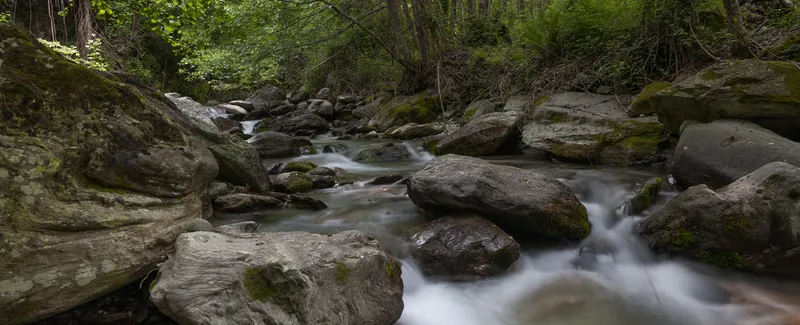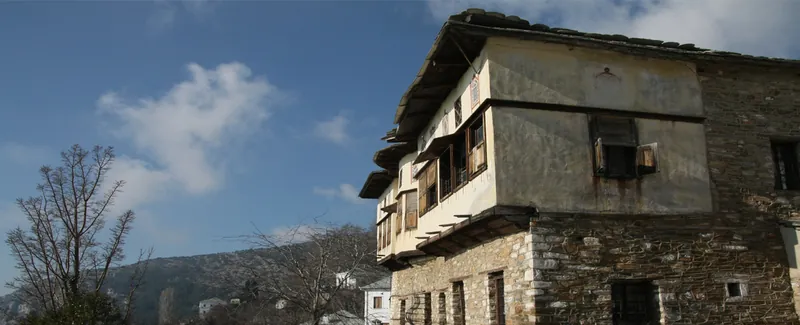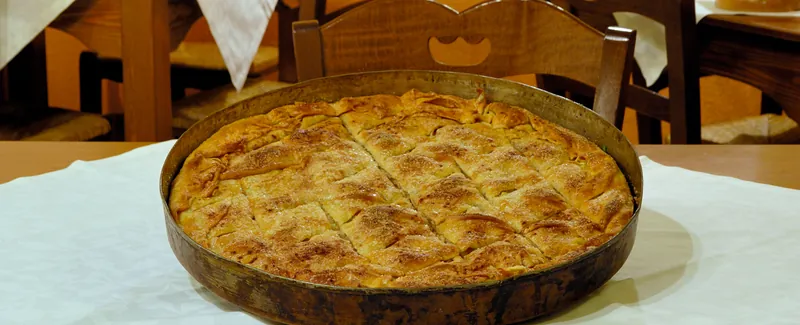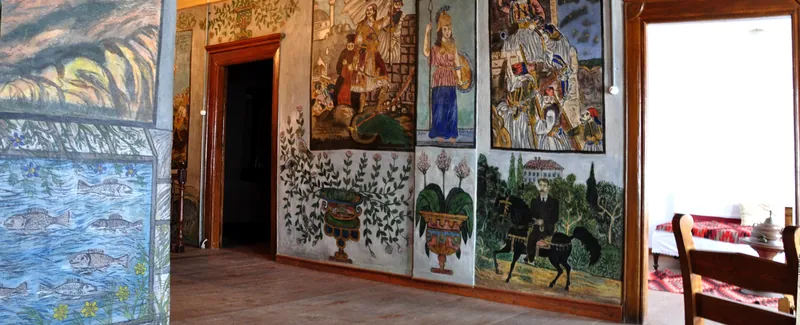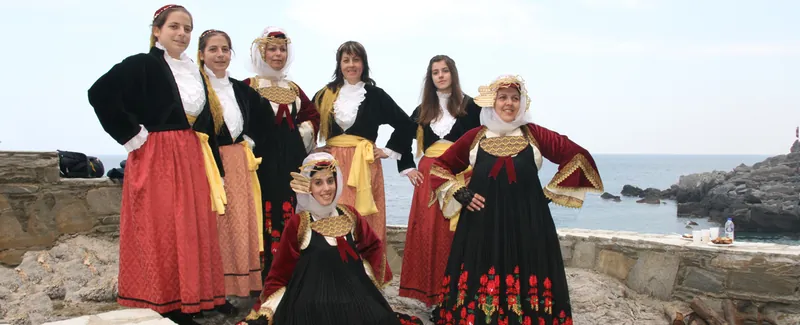
Pelion, the mountain of 24 historic villages and dozens of smaller settlements, of lush nature and rich culture, of food traditions and its own special architecture, has plenty of sights to see.
But it also has an important history that is worth knowing before you visit. People have lived on this mountain since very ancient times, and in every period, from antiquity to the present day, important events took place here. Traditions, legends, captivating myths and real battles are all linked to Pelion, while mythical creatures, warriors and heroes walked its paths or lived here. Every area and every village has its own story of how it was settled and how it got its name, but there are also some big events that marked the whole mountain and made it known far beyond its borders.
Mythology
Beautiful Pelion, with its wonderful nature and mysterious atmosphere, could not fail to catch the eye of the ancient Greeks, who set many stories of Greek mythology here.
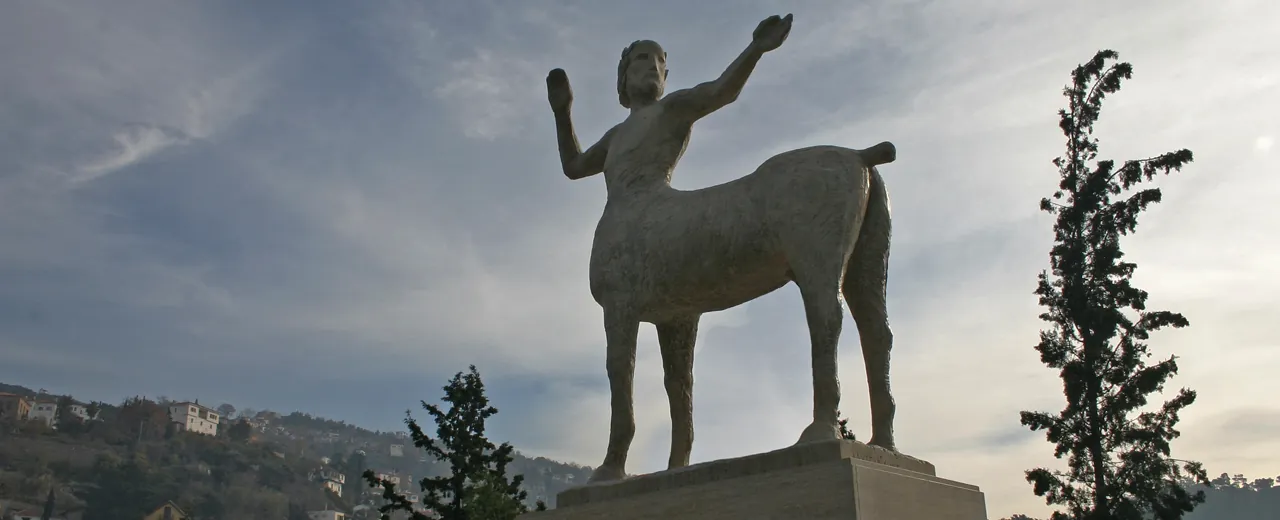
According to myth, Pelion was home to the legendary Centaurs, strange mythical creatures born from the union of Ixion, king of the Lapiths in Thessaly, and Nephele. This is why Pelion is often called "the mountain of the Centaurs". From the waist up they were human and from the waist down horses; they loved wine and women and were quite aggressive. The most important and best known of them was Chiron, son of Cronus and the Oceanid Philyra. He lived in a cave on Pelion and taught medicine, using the healing power of the mountain's herbs, as well as hunting, the art of war and music. He was the teacher of many heroes of Greek mythology, such as Achilles, Theseus and Jason, and Asclepius, the first doctor of mankind, grew up with him and learned from Chiron the secrets of healing illnesses and wounds. In fact, Pelion was famous in ancient times for its herbs and plants, which could cure many diseases. Unlike most other Centaurs, Chiron was fair, wise, virtuous and a friend of humans. Near Milies people still show the cave that tradition says was his home.
Myth also places the Gigantomachy on Pelion: the Giants wanted to tear Pelion from its place and stack it on top of Kissavos, ancient Mount Ossa, so they could reach the gods of Olympus and drive them out. According to myth, the Centauromachy was also fought here, the battle between the Centaurs and the Lapiths over the beautiful Hippodamia.
Tradition says that Pelion was also where Peleus, king of the Myrmidons, married the Nereid Thetis; they were the parents of Homer's Achilles, the hero of the Trojan War. At the wedding feast Eris, the goddess of strife, who had not been invited, threw in the "apple of discord" with the words "to the fairest". This started the first "beauty contest" of mythology: Paris, prince of Troy and its judge, gave the apple to Aphrodite, angering Hera and Athena, and this quarrel became the cause of the Trojan War.
The gods of Olympus seem to have chosen Pelion for their summer stay, and on its summit stood the ancient sanctuary of Zeus Akraios. Local people climbed up there in mid-July, on the hottest and driest days of the year, to ask Zeus to send a little rain.
The wider area of Magnesia is also the setting of the myth of the Argonauts, about 3,500 years ago according to tradition. An oracle had said that Pelias, king of Iolcos, would lose his throne to "the man with one sandal". This was the name given to Jason, who had lost one of his sandals while crossing the Anavros stream, in the area of Alli Meria. As soon as Pelias saw him with only one sandal, he became afraid and, to get rid of him, sent him on a long journey to Colchis to bring back the Golden Fleece, a symbol of wealth and prosperity, believing he would never return. For the journey the Argo was built, a very fast and light ship, the work of the famous shipbuilder Argus, using timber from Pelion. The expedition set off from ancient Iolcos, in the area of today's Volos, and some of the greatest heroes of antiquity took part, such as Heracles. According to local tradition, the Argonauts also stopped at places on Pelion, such as Argalasti and Afissos, where they took water from the spring for their long voyage.
Finally, the forests of Pelion were home to the Dryads, the nymphs of trees and meadows. They were young, beautiful female spirits who lived in the wild, in caves, and roamed the mountains. As long as there was water they were happy, because plants, animals and people could live; but when the springs dried up, they disappeared too.
Antiquity
Around 294 BC, the Macedonian king Demetrius Poliorcetes ("the Besieger") founded the city of Demetrias, next to today's Volos. The city became the centre of life for the Magnesians and marked a new era for the Pelion area.
Many ancient cities and towns have been recorded in the Pelion area: Achilleion, on the edge of Anilio, which tradition says was founded by Achilles himself; ancient Methoni, just outside Ano Lechonia; ancient Koropi; Spalauthra at Horto; and Kasthanaia, off whose coast a large part of the Persian fleet of Xerxes was destroyed by a storm in 480 BC. One of the most important cities of ancient Magnesia was Olizon, near today's Milina. Its king was Philoctetes, who fought at Troy and is the hero of Sophocles' tragedy of the same name.
Ancient poets and writers, starting with Homer, gave Pelion many descriptive and honorary names: Homer calls it "einosiphyllon", with leaves that shiver in the wind, while it was also called "mega" (great) for its grandeur, "polypharmakon" (rich in remedies) for its countless healing herbs and "ylien" (wooded) for its rich timber.
Byzantine times
In early Byzantine times Magnesia, like the whole of Thessaly, belonged administratively to Macedonia. The area suffered raids by the Goths and later the Slavs, who looted it, and Pelion was left almost deserted; none of its towns could grow. In the middle and late Byzantine period, however, so many monasteries were built and so many monks settled on the mountain that Pelion looked like one big monastic state. The noble Maliasenos family played an important part, founding and endowing monasteries in the area in the 13th century. Later, today's Pelion villages grew up around these monasteries. Sadly, most of the old churches have not survived; their place has been taken by impressive post-Byzantine churches.
In late Byzantine times, mainly after the Fourth Crusade (1204), some fertile parts of Pelion, such as Lechonia, passed into the hands of Latin lords and Venetians. Ruins still survive of about twenty forts built at that time by local feudal lords and Venetians to protect themselves from pirates, the great fear of the people of that era.
Ottoman rule
Today's Pelion villages were founded and grew during the Ottoman period. Magnesia finally fell to the Ottomans in 1423. The conquerors had no interest in mountainous Pelion; they settled in the richer lowland and foothill areas, such as Lechonia and Argalasti, pushing out the local people. So the persecuted locals, together with many Christian subjects fleeing from coastal Thessaly, Evia and the Aegean islands, took refuge in the mountains to find safety. They built settlements around the old monasteries, which later grew into famous villages such as Makrinitsa and Zagora. The Ottomans granted privileges to the 24 villages of Pelion: 14 were "vakoufia", meaning they belonged to religious and charitable foundations, and the rest were "chasia", the Sultan's own property. In the vakoufia, such as Argalasti and Makrinitsa, taxes were lower, so they grew richer. But this was not a rule: Zagora, although a "chasi", had great days of glory thanks to its trade and its much-sung "Zagora ships", which carried goods all over the Mediterranean and as far as the East.
From around 1750, Pelion entered a period of great economic and intellectual growth. Pelion products travelled all over the Mediterranean, while liberal ideas and the spirit of the European Enlightenment reached the mountain and prepared the ground for the Greek Revolution. The Greek School (Ellinomouseio) of Zagora, where tradition says Rigas Feraios studied, and the School of Milies are just two examples of the area's intellectual life.
The Revolution on Pelion
The villages of Pelion took an active part in the Revolution of 1821. The scholar Anthimos Gazis declared the revolution in Milies on 7 May 1821, after the service at the Pammegiston Taxiarchon Church. Other members of the Filiki Etaireia (the secret society behind the Revolution) and local captains, such as Kyriakos Vasdekis, joined him. But the uprising, which began with the siege of the castle of Volos, was crushed in blood by the troops of Mahmud Dramali Pasha.
After 1830, the people of Pelion began to move down towards the coast and build houses there. The port of Volos became the link between free and occupied Greece.
The people of Pelion also took an active part in the uprisings of 1854 and 1878, and Pelion was finally freed when Thessaly was joined to Greece: the Greek army entered Volos on 2 November 1881.
Modern times and World War II
In the late 19th and early 20th century, hard political and economic conditions forced many people from Pelion to emigrate, mostly to Egypt, looking for a better life. There they got an education, became wealthy and sent much of their money back home, and the area had a new period of prosperity. Many Pelion mansions were built at that time with money from the Greeks of Egypt, and they still give the area a special charm.
The 20th century did not bring peace to Pelion either. During World War II the occupying forces literally devastated many villages where resistance had been organised, such as Zagora, Portaria and Milies, and executed many patriots.
Perhaps the most tragic case is Drakia, which was named a "martyr village" after the Germans executed 118 of its people on 18 December 1943. Today the village has a cenotaph memorial with the names of all those who were killed.
A presidential decree of 1980, known as the "Pelion Decree", set special building rules and declared the Pelion villages traditional settlements, divided into protection zones.
Today Pelion keeps its traditional character while moving with the times. It is one of the favourite destinations of Greek and foreign visitors in every season, and many of its villages have seen strong tourism growth. Its people, proud of their history and culture, welcome visitors and are happy to show them around their blessed land.
Pelion in 6 chapters
Know what you are looking at: history, nature, architecture, food, arts and customs.