About the village
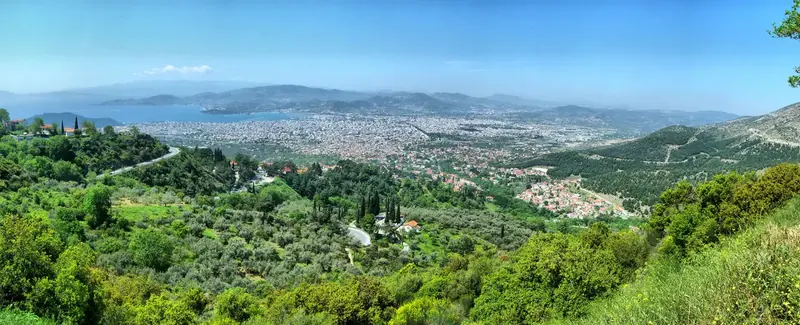
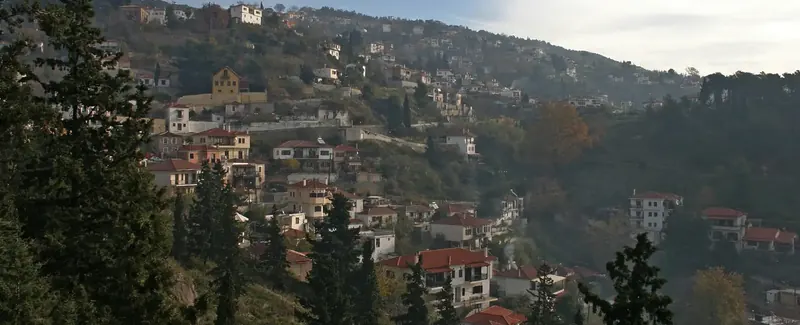
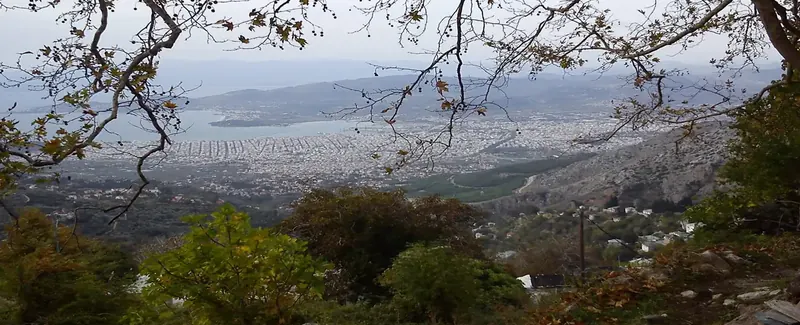
Of all the villages in Pelion, Portaria has been the greatest in terms of commercial growth since it had many eras of prosperity and wealth. It is built on the western slopes of Pelion, north of Volos in a green hillside with flowing waters and panoramic views of the Pagasetic and the surrounding villages. Occasionally it has been given many namings such as “The Lady of Pelion” and “The lady at reception” as it is the first village towards the mountain peak and so it has to “welcome” travellers.
During the Slavic settlement in Greece, the first establishment was called Dryanobaina. At the end of the Byzantine period, many monasteries were built in that area one of which was Panagia Portarea, and around it the settlement grew. The village had its name from this 13th century monastery. Thereafter and until the 18th century, the village had grown into an important commercial center of the area. The sectors with which the villagers were occupied were mainly farming and silk trading and processing, thus growth in these areas were rapid.
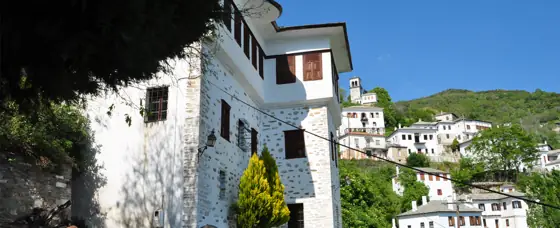
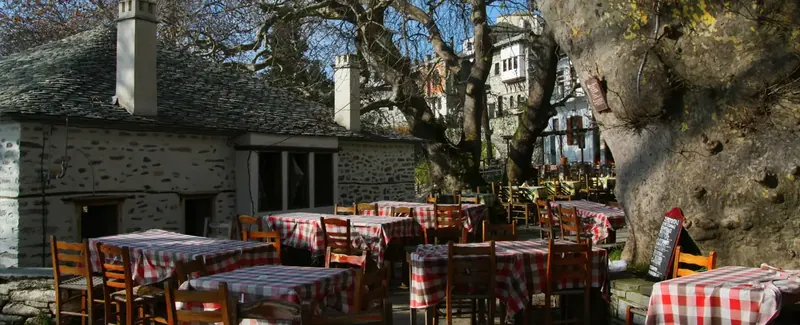
If you decide to visit Portaria, take enough time to discover the many sights. It features, like most villages of Pelion, many large neoclassical mansions built in Thessalian/Macedonian style with stone slab roofs showing the wealth that the area faced, many of which operate today as guesthouses. Villagers, who returned after years of migrating in Egypt, built most of these well-preserved stone mansions.
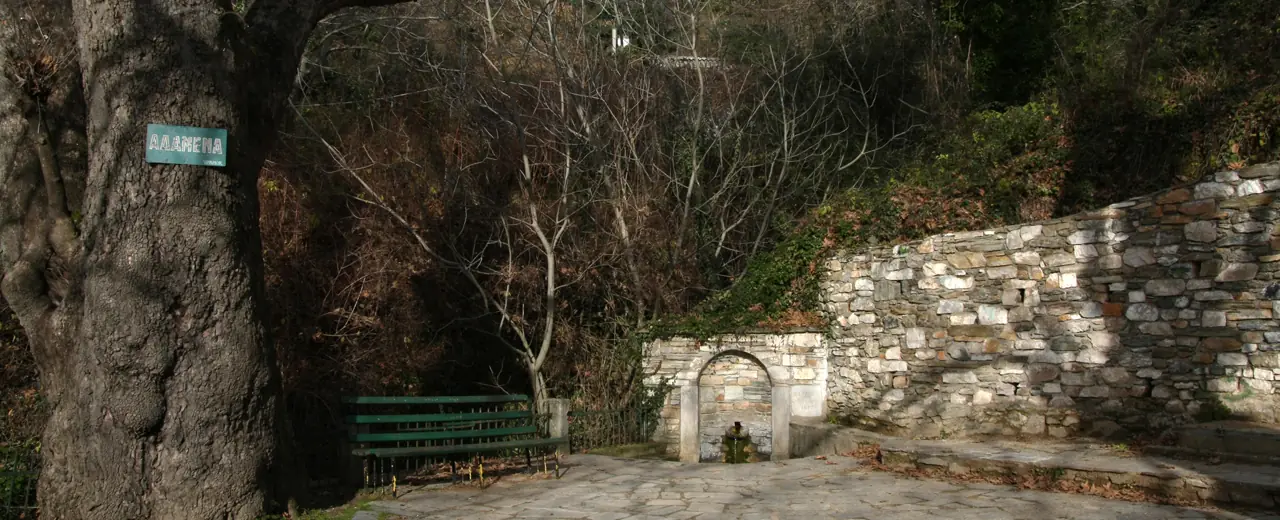
Of course the village could not miss the picturesque cobbled streets, beautiful trails and fountains with running water. We advice you to walk the path of the Centaurs, which makes a round trip of the village and marvel the lush vegetation and nature's beauty. In the area of Karavos, relax and let your senses feel the magic that is offered by the waters of the waterfall. These waters originate from the fountain Mana, located higher, in a landscaped area with a paved square.
The village features 3 squares where you can relax after your walks. The central square “Melina Merkouri” where most cultural events take place, Adamenas square, from where the path towards the Mana fountain starts and the Taxiarchon square with its stone church. If you visit the main square do not miss visiting the hotel “Theoxenia” which is nearby. The hotel was build in 1904 and was one of the most important and luxurious hotels in the Balkans until 1944 when it was burned down by the Nazis.
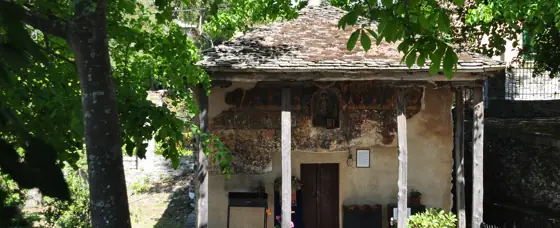
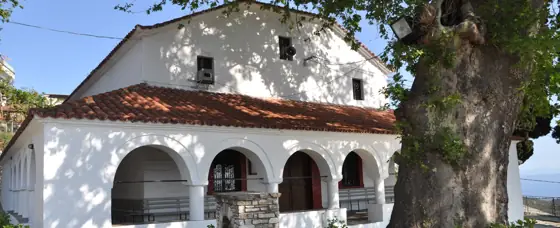
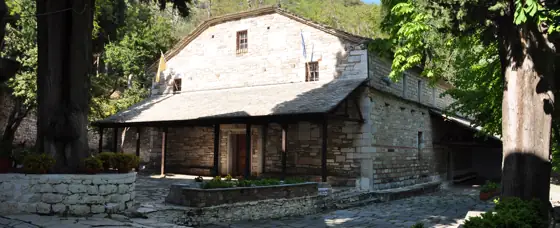
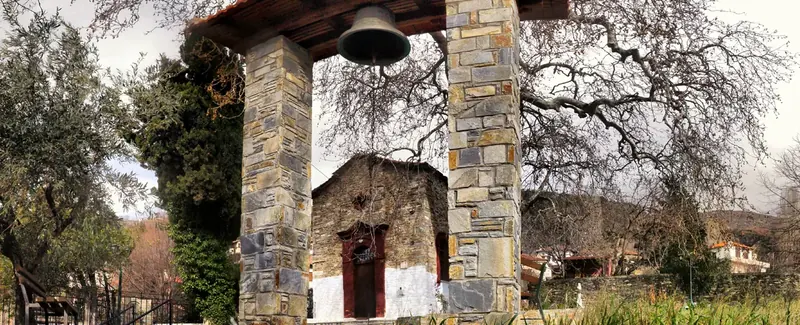
Many are the churches as well, with Panagia Portarea as mentioned, standing out. The monastery was build around 1273, maybe earlier and has many remarkable paintings. Today only a small church is preserved from the Monastery. Its main entrance adorns the image of Virgin Mary (Panagia), as it happened in the monastery. Next to it is the church of Agios Nikolaos, a triple basilica of 1856 with special relief representations inside the temple, inlaid with gold. Equally important are the church of Agioi Anargyroi , the monastery of Agios Ioannis (St. John The Baptist) and the Monastery of Panagia Odigitria (Virgin Mary).
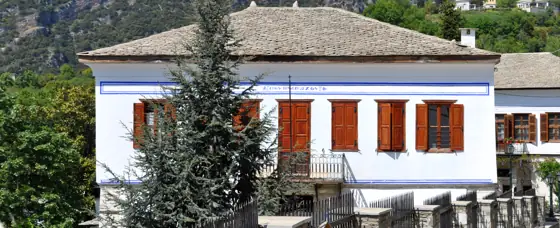
An interesting stop during your tour would be in the history and folklore museum that operates in the village and is housed in the two-story mansion of D.Zulia. There the visitor has the opportunity to discover about the era of great prosperity in Portaria and learn about the economical and cultural growth of the area from the early 19th century to the mid 20th through a permanent exhibition.
Besides sightseeing, visitors will have the chance to attend in a series of cultural events that take place in the village through out the year. These events have a wide range, from a flower exhibition in May, where one can marvel the fragrances and the colors with which the village is flooded, dance festivals organized in the summer (Children’s folk dance festival and International folk dance festival) where you can enjoy music and dances to the revival of the traditional Pelion wedding every August, which is regarded as one of the most important events taking place. Finally, for the motorsport enthusiasts, in September, the Portaria Hill climb rally event takes place, organized by Volos Auto Club, and is part of the national hill climb championship.
Before leaving the village, do not miss tasting some local tsipouro or buying some of the handmade sweets produced by the women’s agrotourism company located in Portaria.