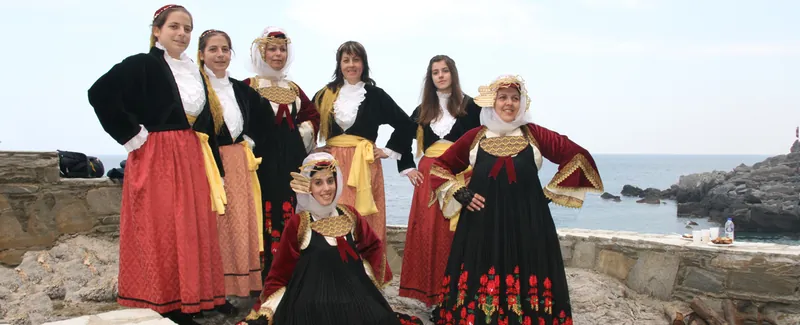
Beautiful landscapes, thickly wooded slopes, villages hidden in the green, steep gorges and cliffs, striking peaks, babbling streams and wonderful beaches: these are just some of the things that make Pelion's nature so special.
It's a mountain worth visiting in every season, with a constant play of changes and contrasts that stays with you long after you leave.
It brings together the green of the mountain and the blue of the sea, and its natural wealth is perfect for outdoor activities such as horse riding, hiking, mountain biking, swimming, diving and water sports, as well as all kinds of alternative tourism.
Spring doesn't reach all of Pelion at the same time: on the lower slopes the buds are already opening while the high peaks are still covered in snow. This mix of colours is what makes Pelion so beautiful in spring. Once the season has truly arrived, the mountain fills with endless green and households start getting ready for Easter. Nature comes back to life, colourful flowers fill every corner and every garden, and the blossom slowly climbs towards the higher parts of the mountain.
In summer the mountain is truly a paradise. The greenery keeps things cool, the trees give shade and rest, and the wildflowers and herbs scent your walks, while the beaches are full of life and promise the best swims of your life. The view from up high towards the calm sea horizon is magical, and the incredible sunsets and cool nights under the moon and a clear sky wake up all the senses.
Even autumn, the most melancholic time of the year, has its own beauty here. The trees get ready to drop their leaves and the green gives way to all the colours of the rainbow. Chestnut and walnut trees take centre stage, with squirrels busily at work in them, while the rain and strong winds bring a mood of melancholy and reflection.
Finally, winter finds its best refuge here. Plenty of snow covers the mountain's imposing peaks in its own special way: Xeforti or Pourianos Stavros, Pelion's highest peak (1,624 m), Aidonaki or Kotroni (1,551 m), Pliasidi (1,548 m), Agriolefkes (1,471 m) and Schitzouravli (1,451 m). At Agriolefkes, in the middle of a beech forest, is the Pelion ski centre, which fills up every winter with winter-sports fans. In the lower parts of Pelion, of course, winters are milder and the vegetation richer.
Flora
Pelion has great biodiversity, mainly thanks to its varied climate and the different vegetation zones found here. Its flora is one of the richest and most remarkable not only in Greece but in the whole of the Balkans, with more than a thousand plant species, from common ones to endemic and rare.
The mountain has three vegetation zones, from dense forest to maquis. At the highest altitudes, and especially in the north, beech forests dominate. In the middle zone, oak and chestnut forests take over, while in the lowest parts, the Mediterranean zone, you'll find wild plants and aromatic herbs with healing properties, such as sage, thyme and mountain tea.
There is also a lot of farmland, mainly in central and southern Pelion on the Pagasetic Gulf side, as well as many olive groves. Between 100 and 400 metres the slopes are covered with olive trees, from which the locals make top-quality olive oil. In the lower areas people grow fruit trees such as pear, peach and orange, while higher up there are cherry and apple trees, which give excellent apples like the famous “zagorina” of Zagora.
Plane trees and alders grow next to streams and springs, and huge centuries-old plane trees stand in almost every village square in Pelion, keeping the villagers company for generations.
Finally, some villages, known as “flower villages”, such as Makrirachi and Lechonia, grow many kinds of flowers, including hydrangeas and gardenias, with wonderful scents and colours. Many traditional flower growers and cooperatives cultivate and sell them on a large scale.
Fauna
Pelion's wildlife is just as rich and varied across the whole mountain. Many small and large mammals live here, such as foxes, jackals, wild boar (mainly around Zagora and Xorychti), wolves, weasels, roe deer and squirrels. Reptiles and amphibians such as frogs, tortoises, lizards, salamanders and snakes of all sizes and colours, as well as many small rodents, live on Pelion's slopes. Farm animals complete the picture: donkeys, mules, horses, cows, goats and sheep.
Birdlife is also rich, with eagles, hawks, blackbirds and partridges. Several migratory species pass through the whole mountain, and the Hellenic Ornithological Society has listed Pelion as an Important Bird Area.
Of course, wildlife is not as rich as it once was, because of heavy building and human presence. Still, Pelion is home to some rare species protected by European Union directives, such as the honey buzzard and the white-backed woodpecker among birds, and the stag beetle among insects.
Seas
Dozens of small and large beaches on both the Pagasetic Gulf and the Aegean, golden sands and natural coves along a lacy coastline make up the sea side of Pelion, which visitors love for their summer trips. Some beaches are busier and more cosmopolitan, with more tourism, organised facilities and plenty of choice, while others are remote and perfect for carefree, relaxing swims.
Many of them have hot sand, pretty pebbles, crystal-clear water and steep, rocky shores. Small tavernas with seafood and traditional meze, beach bars and places to stay complete the picture, and on some beaches summer parties make them a magnet for a night out.
Chorefto, Agioi Saranta, Plaka, Agios Ioannis, Papa Nero, Damouchari, Potistika and Platanias are just a few of the Aegean beaches that will win you over at once with their clear turquoise water, golden sand, round white pebbles and lush greenery that reaches right down to the shore. Here you can try water sports such as sailing and windsurfing, but watch out for the high waves and cold water.
On the other side, the Pagasetic Gulf offers calm, peaceful water for a good swim, at beaches such as Kala Nera, Kalamos, Boufa and Afissos, all ideal for families.
Finally, Pelion's seas hide many beautiful underwater spots, offering diving for the more adventurous among you.
Running water and streams
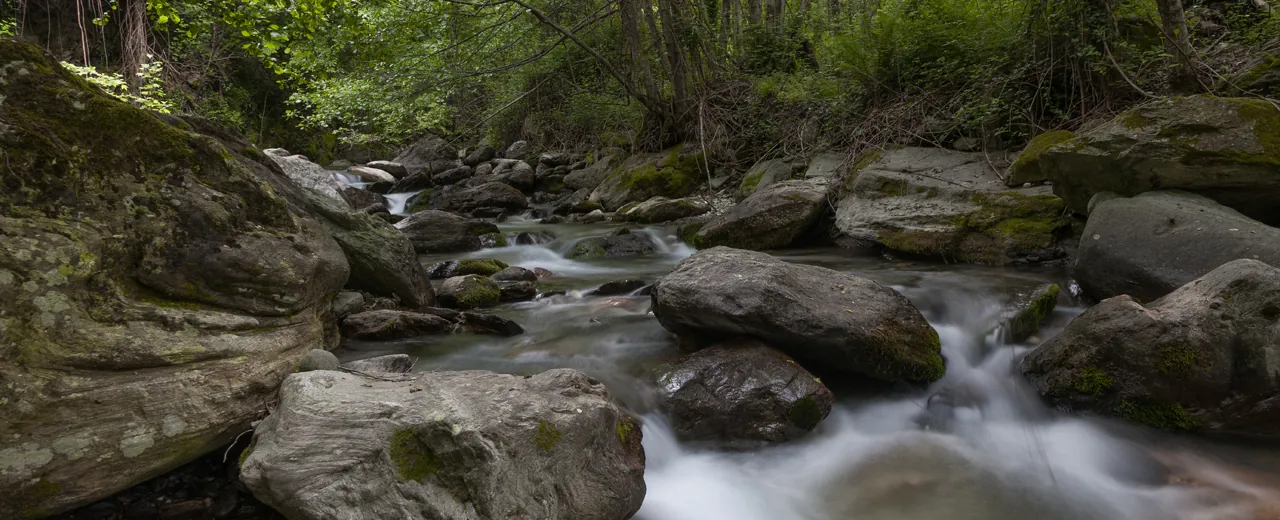
Between Pelion's villages flow many streams that cool visitors down and give the landscape a special beauty. A dense network of torrents and streams runs across the mountain, such as the Krafsidonas, the Vrychonas (Agios Lavrentios), the Pnevmatikos (Argalasti), the Xirorema (Gatzea), the Kakorema (Keramidi), the Cholorema (Afetes), the Magarema (Makrirachi) and the Metallorema (Syki). There are also many springs used for drinking water and irrigation, such as Mana in Portaria, Flambouro in Makrinitsa, Sklithra in Drakia and Lagonika in Pouri.
In every Pelion village you'll find traditional fountains that refresh passers-by with their clear, cool water.
Protected areas
A large part of Pelion belongs to Natura 2000, the European network of protected areas, which here includes many different habitat types: forests, rivers and streams, as well as coastal and marine areas. The protected zone covers mainly northern and eastern Pelion, from the peaks down to the Aegean coast.
The mountain also has wildlife refuges, such as the area around the Flamouri Monastery near Keramidi, the forest of Palia Mitzela near Pouri, the area from Sarakinos to Kaliakouda above Makrinitsa, and areas around Milies, Afetes and Mouresi.
Finally, Pelion has important habitats, areas where hunting is banned, and areas that have been designated landscapes of outstanding natural beauty.
Pelion in 6 chapters
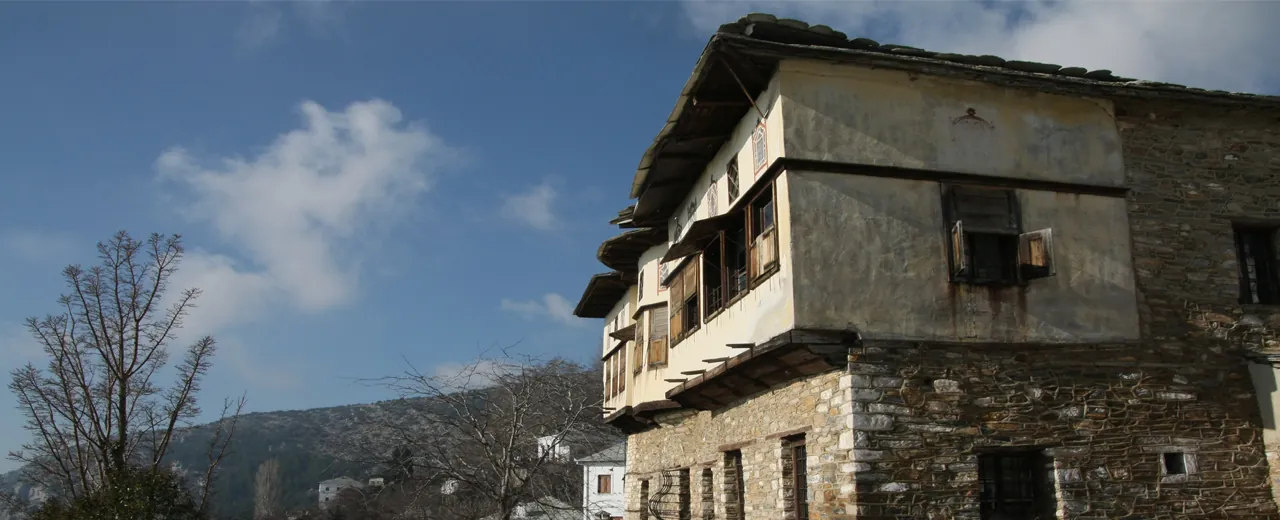
Know what you are looking at: history, nature, architecture, food, arts and customs.